
Press Release Photos: How to Supply Journalist-Ready Images
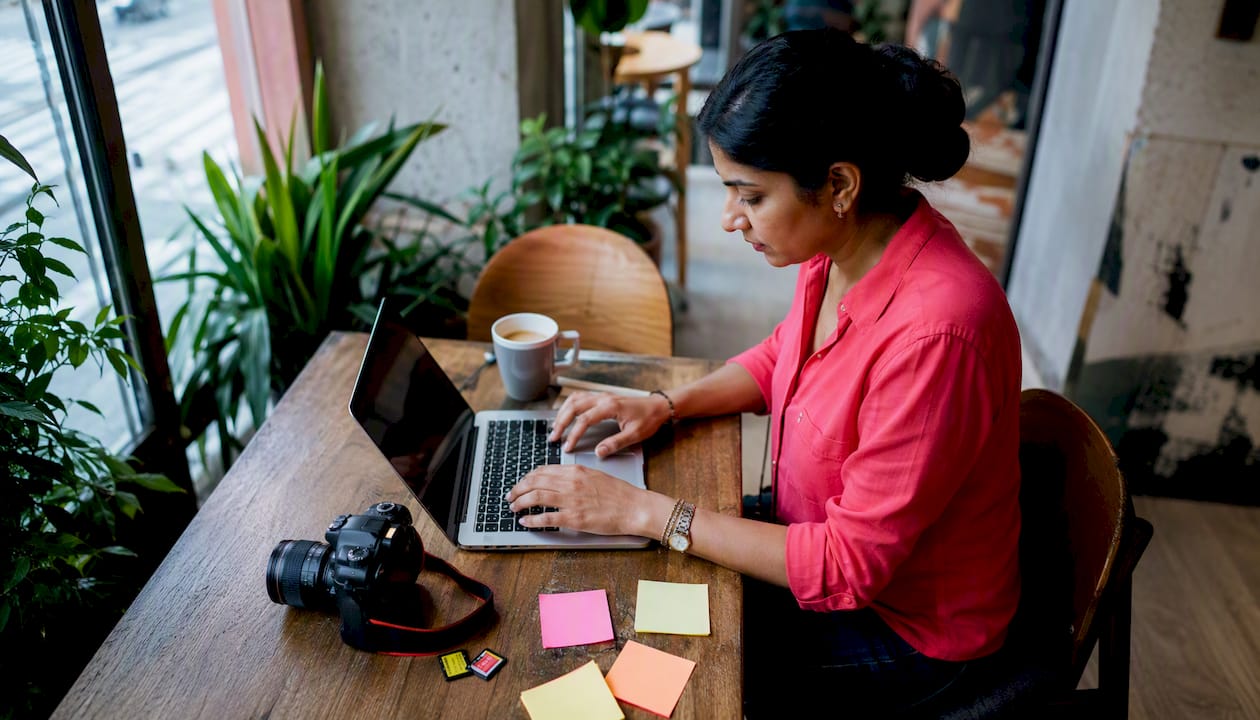
Yes, include photos in your press release. A hero image and a high-resolution logo are the minimum; everything else depends on the story. Three things matter most: make your files downloadable without friction, name them clearly, and never attach large images to an email.
Here is what to do first:
- Provide high-resolution assets via a branded download link — a press room page, a public Google Drive folder, or a Dropbox link works well. EPA guidance on adding photos to news releases recommends linking directly to full-size files rather than embedding compressed versions.
- Name every file descriptively —
acme-ceo-portrait-horizontal.jpgtells a journalist exactly what they have;IMG_4392.jpgdoes not. - Include a one-line caption and credit with each image — journalists should never have to chase you for this information.
Pro Tip: Send a lightweight thumbnail in the email body so journalists can preview the image, then link to the full-resolution download. This keeps inboxes clear and assets accessible.
Table of Contents
- Why do press release photos improve your chances of coverage?
- Which photos should you include in a press release?
- What technical specs do journalists need from your images?
- How should you package and deliver photos to journalists?
- Copyright, licensing, and model releases: what UK comms teams need to know
- Where can you source press release photos in the UK?
- What do professional press photo shoots cost in the UK?
- Your press-photo pack checklist
- When should you hire a professional photographer for press images?
- Key takeaways
- What actually gets a press photo used
- Alex Gell Photography: press-ready images with fast turnaround
- Further reading and UK resources for press-ready images
Why do press release photos improve your chances of coverage?
Images increase engagement and make stories easier for editors to run. A journalist who receives a publication-ready photo alongside your release can place the story without commissioning their own shot, which removes a significant barrier to coverage.
What journalists actually want is authenticity. Editorial-style portraits and candid product-in-use shots tell a better story than polished stock imagery, and editors can spot a generic library photo immediately. Multiple crops and orientations matter too: a picture desk needs a horizontal for a web feature, a square for social, and sometimes a vertical for a print column.
Asset download priorities from press kits: logos are downloaded in most kit interactions, product photos or screenshots in a large majority, and founder or CEO headshots in many cases.
Poor or low-resolution images do not just get ignored; they actively reduce the likelihood of coverage. An editor who has to request better files will often move on to the next story instead.
Which photos should you include in a press release?
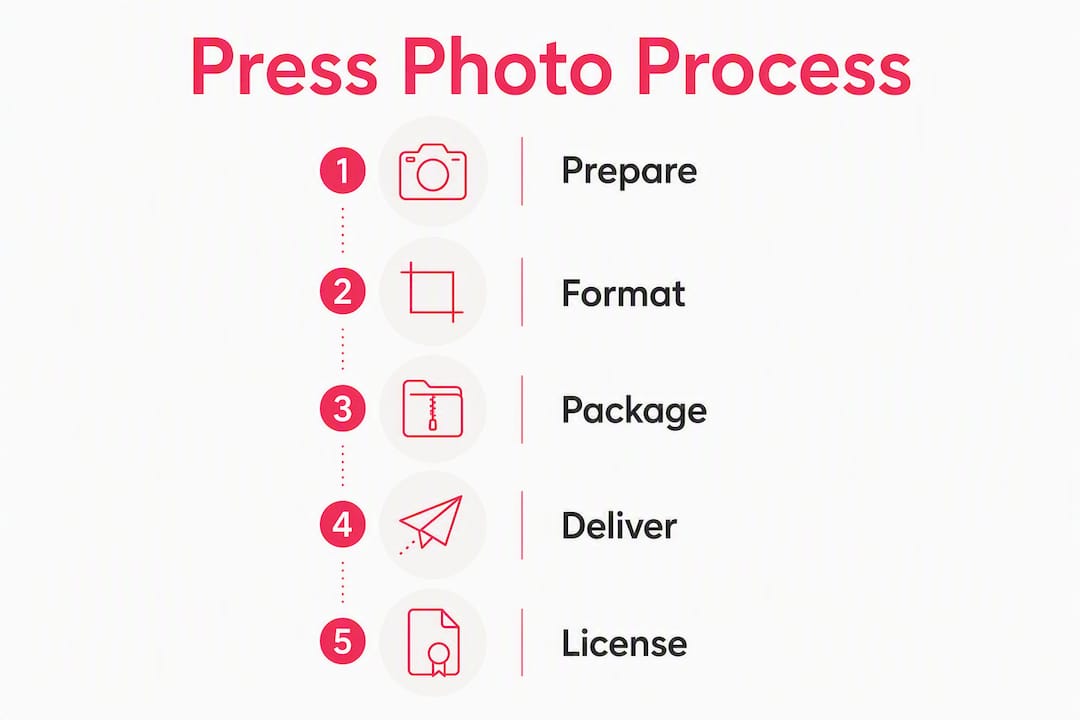
Start with a hero image and a high-resolution logo. Every other image you add should earn its place by adding editorial value to the story.
Here is what to prepare:
- Hero image — one strong, publication-ready photograph that captures the story. Horizontal orientation, minimum 2,000 pixels on the long edge.
- High-res logo — supply both a colour version and a monochrome version, in PNG with a transparent background.
- Product shots — studio images on a clean background plus at least one in-use or lifestyle shot showing the product in context.
- Founder or CEO headshot — a professional portrait, not a cropped conference photo. Journalists use these constantly.
- Candid team or event photos — particularly useful for product launches, company milestones, and event announcements.
- Environment or office shots — helpful for feature pieces and profiles.
- Screenshots — for digital products, apps, or software, include clean, high-resolution screen captures.
On quantities: three to eight supporting images alongside your hero is a practical range. Always supply horizontal (16:9 or 3:2), square (1:1), and vertical (4:5 or 2:3) crops so editors can use the image across formats without asking you for a resize.
Pro Tip: Prioritise authenticity over polish. A genuine moment from your event will outperform a staged studio shot in most editorial contexts. Include a brief caption and photo credit with every file.
What technical specs do journalists need from your images?
Supply publication-ready files from the start. Sending images that need resizing or reformatting adds friction and reduces the chance they get used.
| Use case | Format recommendations |
|---|---|
| Print (newspaper, magazine) | High-resolution files suitable for print quality, typically TIFF or high-quality JPG with appropriate colour profiles |
| Online / web | Optimised JPG or WebP files with standard colour profiles |
| Social media | Square-format JPG files optimised for social media display |
| Logo (all uses) | Vector formats preferred such as SVG, or PNG with transparent background |
Practitioners recommend providing print-ready and web-optimised versions to meet publication needs. The EPA's guidance suggests images between 300 and 1,200 pixels wide depending on purpose, using standard formats such as JPG, PNG, and TIFF.
For colour profiles: use sRGB for all web and social assets. If a publication requests print-ready files, supply CMYK or flag that you can convert on request. Embed IPTC or XMP metadata in every file — caption, creator name, copyright notice, and contact email. This information travels with the file even when it is separated from your press pack.
Pro Tip: Include both high-resolution originals and pre-sized web derivatives in your download pack. Journalists on deadline will use the ready-to-go version; picture desks will want the original.
How should you package and deliver photos to journalists?
Make assets instantly downloadable from a branded press room or shared folder. Do not attach large files to your pitch email.

Gating press assets behind a registration form is one of the most common mistakes in PR. Journalists will abandon a sign-up wall and move on. Public, direct download links are the standard.
Preferred delivery options:
- Dedicated press room or media page — a page on your website where all assets live permanently and are openly accessible.
- Public shared folder — Google Drive or Dropbox with a direct link, no sign-in required.
- ZIP archive — a single downloadable file containing the full pack, ideal for journalists who want everything at once.
- FTP or media portal — for larger organisations or broadcast-quality video assets.
A well-structured digital press kit often lives on a dedicated press page and offers both a ZIP archive and individual file downloads to suit different journalist workflows.
File naming matters. Use a consistent format: [company]-[subject]-[orientation].jpg. For example: alex-gell-product-launch-horizontal.jpg. Avoid spaces, special characters, and camera-generated filenames.
Press-photo pack checklist:
- Hero image (high-res, horizontal)
- 3–8 supporting images
- Logo (colour PNG and mono PNG)
- Captions and cutlines (in a separate text file or CSV)
- Photo credits for each image
- Licensing statement
- Model and property releases (where applicable)
- Contact name, email, and phone number
Pro Tip: Avoid gating downloads behind registration. A journalist on a tight deadline will not create an account to access your images.
Copyright, licensing, and model releases: what UK comms teams need to know
Photographers normally own the copyright in their images under UK law. When you commission a shoot, you need a clear written licence that permits editorial use — and you need to pass that licence information to journalists alongside the images.
What to include with every download:
- A one-line licence statement — for example: "These images are licensed for editorial use in connection with [Company Name]. Commercial or advertising use requires prior written consent."
- Duration and geography — if your licence is time-limited or territory-specific, state it clearly.
- Photo credit format — tell journalists exactly how to credit the image. A standard format is: Photo: Photographer Name / Company Name.
- Model releases — required for any identifiable person in the image. A journalist publishing a photo without a release for a commercial context can face legal exposure; make it easy for them by including signed releases in your pack.
- Property releases — needed for private property (interiors, branded spaces) used in a commercial context.
Keep licence text short and machine-readable. Bundle it as a plain-text file or embed it in the IPTC copyright field of each image. For UK-specific considerations around privacy and publicity rights, consult a media law specialist rather than relying on general guidance.
Pro Tip: Include a template credit line in your press pack: "Photo: [Photographer Name] / [Your Company]." Journalists will use it verbatim, which means your photographer gets credited and your brand gets a mention.
Where can you source press release photos in the UK?
Commission a professional photographer when authenticity and editorial quality matter. Use reputable stock only as a last resort or for filler assets where the image is incidental to the story.
Option 1: Professional photographer (recommended)
A professional delivers bespoke images tailored to your story, with correct licences on delivery and multiple crops ready for different outlets. Alex Gell Photography specialises in commercial and event photography across London, Berkshire, and Oxfordshire, with fast turnaround and press-pack delivery built into the service. The images are editorial in style — candid, authentic, and publication-ready — rather than the staged look that editors recognise and avoid.
Option 2: Stock libraries (Unsplash, Shutterstock)
Unsplash offers free images under a permissive licence, though the quality is variable and the same images appear across thousands of publications. Shutterstock (UK) provides a larger, higher-quality catalogue with clearer commercial licensing, but costs accumulate quickly and generic stock rarely adds credibility to a news story. Both options carry the risk that another outlet has used the same image in a similar context.
Option 3: In-house or user-generated content
Quickest and cheapest, but quality and rights vary significantly. If you use staff photos or images taken by clients, confirm you hold the rights, supply captions, and obtain model releases for any identifiable individuals.
Quick decision checklist:
- Is this story visually important? Commission a professional.
- Is the image incidental (e.g., a generic office backdrop)? Stock may suffice.
- Do you have existing in-house assets that are high-resolution and properly licensed? Use them, with captions and releases attached.
What do professional press photo shoots cost in the UK?
Expect to pay a moderate amount for a professional session that delivers publication-ready assets. Costs vary depending on the type of shoot, duration, location, and number of final images required.
Lead times to plan for:
- Shoot day: — a half-day session typically produces enough material for a full press pack.
Same-day or next-day turnaround is possible for urgent press needs, though it commands a premium. Building photography into your PR planning from the outset — rather than commissioning it after the release is drafted — consistently produces better results and avoids the last-minute scramble that leads to low-resolution social crops being submitted as press images.
Your press-photo pack checklist
A good press-photo pack is small, structured, and contains both high-resolution and web-ready files with clear metadata. Here is everything to include:
- Hero image (high-resolution, horizontal, suitable for publication requirements)
- Several supporting images (product, event, team, environment)
- High-resolution logo in colour and monochrome, both with transparent backgrounds
- Captions and cutlines for every image (in a separate .txt or .csv file)
- Photo credits in a consistent format
- IPTC metadata embedded in every file (caption, creator, copyright, contact)
- Signed model releases for all identifiable individuals
- Property releases where applicable
- Licence statement (one line, plain text, bundled with the download)
- Contact name, email, and phone number
- ZIP archive of the full pack, plus individual download links for each file
Descriptive filenames and embedded metadata are non-negotiable in newsroom workflows. A journalist who receives a well-labelled pack can drop your images straight into their CMS without a single follow-up email.
Offer both a ZIP download and individual file links. Some journalists want everything at once; others need a single image quickly. Catering to both takes minutes to set up and removes a reason not to use your assets.
When should you hire a professional photographer for press images?
Hire a professional when you need consistent, publishable images and clear commercial licensing from the moment the files land in your inbox. Alex Gell offers exactly this: a tailored shot list, multiple orientations and crops, embedded metadata, signed model and property releases, and a branded media pack ready for distribution.
What a professional press shoot delivers:
- Bespoke shot list aligned to your story and the outlets you are targeting
- Multiple crops and orientations (horizontal, square, vertical) from every key moment
- Embedded IPTC metadata — caption, creator, copyright, and contact in every file
- Signed model and property releases included in the pack
- Branded media pack with captions, credits, and a licence statement
You can see examples of this approach in the corporate and event portfolio, which includes editorial-style images from commercial shoots and live events across London, Berkshire, and Oxfordshire.
For teams commissioning a shoot, the process is straightforward: share your brief, agree a shot list, and receive a complete press-ready pack within the agreed turnaround. Fast-turnaround options are available for urgent PR deadlines.
Key takeaways
Press release photos increase coverage when they are publication-ready, clearly licensed, and delivered without friction via an open download link.
| Point | Details |
|---|---|
| Include a hero image and logo | Every press release needs at minimum a hero image and a high-res logo in colour and mono. |
| Meet print and web specs | Supply files at 300 DPI and 2,000 pixels minimum width for print; include web-optimised versions at 1,200 pixels. This matches publication-ready standards typically required by journalists. |
| Deliver via open download links | Never gate assets behind registration; use a press room page or public shared folder. |
| Bundle captions, credits, and releases | Include a licence statement, model releases, and photo credits with every download pack. |
| Commission Alex Gell for press-ready shoots | Alex Gell delivers bespoke, editorially styled images with licensing, metadata, and fast turnaround across London, Berkshire, and Oxfordshire. |
What actually gets a press photo used
The conventional wisdom in PR is that better images mean better coverage. That is broadly true, but the detail most teams miss is that "better" rarely means more polished. It means more usable.
Editors are not rejecting your images because they lack a studio backdrop or dramatic lighting. They are rejecting them because the file is 800 pixels wide, the filename is meaningless, there is no caption, and the licence is unclear. Fix those four things and a decent phone photo will outperform a beautifully lit studio shot that arrives as an email attachment with no rights information.
The other mistake I see repeatedly is treating the hero image as an afterthought. Teams spend weeks on the press release copy and then grab a cropped social media image at the last minute. That image will be the first thing a picture editor sees, and if it is not immediately usable, the release goes in the bin regardless of how good the story is.
Composition matters, but not in the way most people think. The images that get picked up consistently are the ones with a clear human element, a clean background, and enough visual breathing room that an editor can crop them without losing the subject. Dramatic angles and heavy post-processing look impressive on Instagram and awkward on a news page.
The practical upshot: brief your photographer on the outlets you are targeting before the shoot, not after. A photographer who knows the image is destined for a broadsheet feature will frame it differently from one shooting for a trade magazine. That briefing conversation is worth more than any amount of post-production.
Alex Gell Photography: press-ready images with fast turnaround
If you need professional press release photos that arrive correctly licensed, properly labelled, and ready to distribute, Alex Gell Photography covers commercial shoots across London, Berkshire, and Oxfordshire with a turnaround built around PR deadlines.
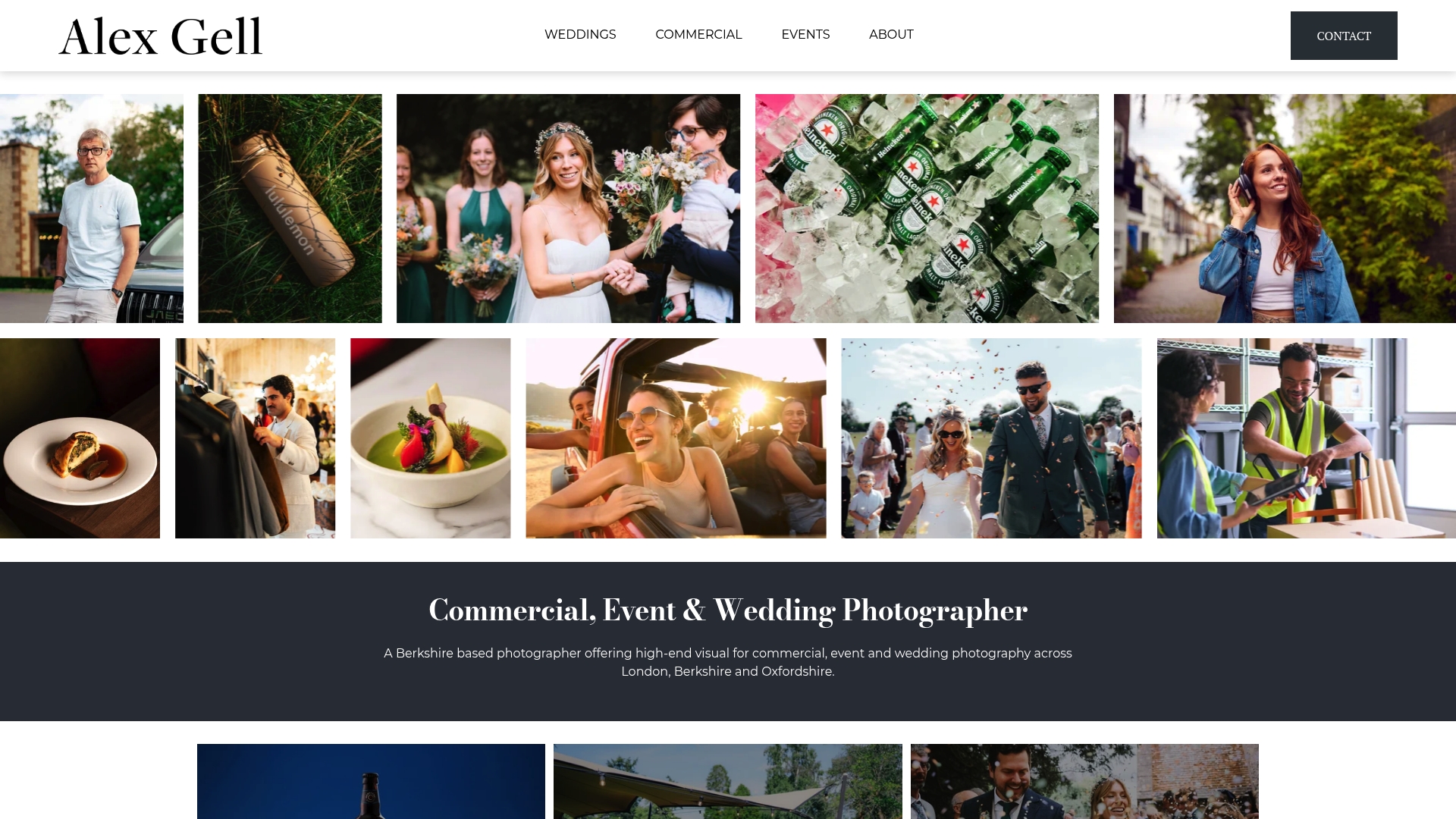
The service covers everything from single-subject headshot sessions and product shoots to full event reportage, with multiple crops, embedded metadata, model releases, and a branded media pack included as standard. You get publication-ready files for both print and web, without the back-and-forth that slows down most press pack assembly.
To commission a shoot or request a quote, visit the commercial photography service page or get in touch directly. Fast-turnaround bookings are available for urgent PR needs across the South East.
Further reading and UK resources for press-ready images
- Can a Press Release Have Images? (Prowly) — covers the case for including images and best practices for delivery without large email attachments.
- British Library Press and Media page — a strong example of a UK institution's press room with downloadable high-resolution images and clear usage terms.
- The Photographers' Gallery Press area — demonstrates how a UK arts organisation structures press releases alongside direct image downloads.
- Royal Collection Trust Press Releases — another UK press room example with filming and photography guidelines for media.
